
Why Does Being in Nature Make Us Feel Better? The Psychology and Neuroscience of Nature Therapy
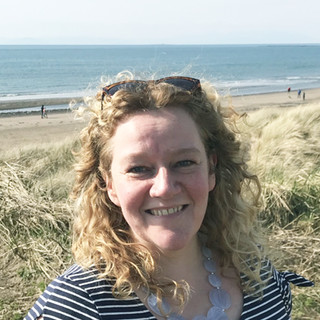
Most of us have probably experienced feeling better after getting outside. You might go for a walk because you've had a difficult day, because you've been staring at a screen for too long, or simply because you need to get out of the house and clear your head.
Sometimes you come back feeling quite different, even though nothing has actually changed.
I've certainly experienced this myself, and over the years I've become increasingly interested in what it is about being outdoors that can have such a noticeable effect on how we feel.
Nature therapy uses contact with natural environments as part of supporting psychological wellbeing and therapeutic change. Research suggests that spending time in nature may help reduce stress, restore attention and reduce rumination, while outdoor therapy can also change the therapeutic experience through movement, sensory engagement and a different type of interaction between therapist and client. Importantly, nature doesn't have to be simply the backdrop to therapy. Used thoughtfully, the environment itself can become part of the therapeutic process.
This is something that became particularly interesting to me as a therapist and hypnotherapy trainer, and ultimately contributed to my development of Hypnosis Through Nature®.
I'm not someone who thinks we need to make grand claims about the healing power of nature. Going for a walk isn't going to resolve someone's trauma, cure their depression or magically regulate their nervous system. But I do think there is something genuinely interesting happening when we change our environment, and there is a growing body of research that helps us understand some of it.

This photo of a little corner of my garden shows how adapatable nature therapy can be, and that you don't need huge, expanisve, wild spaces to work effectively with cliets. This little vignette has a wealth of metaphors we can use with our clients, including a mirror which can be used to discuss how we see ourselves and what is reflected through our eyes, and a little rowan tree, which can be used to discuss growth, seasonablity and transformation. We could even therapeutically discuss the leaves on the ground and how everything within an ecosystem - or a life - has an important role to play.
What is nature therapy?
Nature therapy is actually a fairly broad term. It can include walking therapy, ecotherapy, mindfulness outdoors and other approaches in which contact with nature forms part of the therapeutic process.
But there's an important distinction that I think sometimes gets missed.
There is a difference between doing therapy outside and actually using nature as part of therapy.
You could take exactly the same therapy session you would normally conduct in your consulting room and have it sitting on a park bench instead. That might be really beneficial for some clients. The change of environment alone could make the experience feel quite different.
But we can go further than that.
When we work outdoors, we have movement, sounds, smells, temperature, changing surroundings and all kinds of unexpected things happening around us. Rather than seeing those things as irrelevant to the therapy, we can potentially work with them.
That distinction became very important when I was developing Hypnosis Through Nature® because I wasn't particularly interested in simply taking conventional hypnosis outside. I was much more interested in what happens when the natural environment becomes part of how we work.
So why does being in nature make us feel better?
There's no single answer to this, which is probably worth establishing from the outset.
You'll sometimes see claims online about nature "resetting the nervous system" or having various dramatic effects on the brain. As is so often the case, the reality is more complicated.
There are several theories and areas of research that may help explain why many people experience psychological benefits from spending time in natural environments.
And one of the most interesting is what happens to our attention.
Nature may give our attention a break
Think about how much is competing for your attention during an average day.
Emails, phones, social media, work, conversations, traffic, appointments, decisions and all the little things you're trying to remember.
A lot of this requires what psychologists call directed attention. We're deliberately focusing on one thing while trying to ignore everything else.
One influential explanation for why nature can feel restorative is Attention Restoration Theory, developed by environmental psychologists Rachel and Stephen Kaplan.
The basic idea is that this type of effortful attention becomes tiring.
Natural environments can engage our attention in a rather different way. You might notice the movement of water, hear a bird, watch clouds moving or become aware of leaves moving in the wind. You're paying attention, but you're not necessarily having to work at paying attention.
The Kaplans described this as soft fascination.
I find this particularly interesting from a hypnosis perspective because hypnosis is also closely connected with attention and absorption.
We're sometimes far too focused on the idea that hypnosis means concentrating really hard on the therapist's voice while everything else disappears. In reality, attention is far more fluid than that.
Being outdoors makes that very obvious.
What happens to stress when we're in nature?
There's also a substantial amount of research looking at nature and stress.
Studies have explored subjective feelings of stress as well as physiological measures including heart rate, blood pressure, cortisol and aspects of autonomic nervous system activity.
Again, I think it's important not to turn this into the claim that nature automatically "regulates the nervous system".
It doesn't work like that.
But our environment clearly affects how we feel physically and psychologically. That shouldn't really be surprising.
Imagine sitting in a small, brightly lit, noisy room and then compare that with sitting somewhere you personally find peaceful outdoors. Your surroundings form part of your experience.
And that applies in therapy too.
A client doesn't leave their body and nervous system at the door when they come for therapy. They're responding to you, to what you're discussing and to the environment they're sitting in.
Changing that environment can change the experience.
Nature can get us out of our heads
Another interesting area of research is rumination.
Rumination is that repetitive type of thinking where you go over and over the same problem, conversation or worry without really getting anywhere.
Most of us know the experience.
And I think this is one of the areas where being outdoors can be particularly interesting.
If you're sitting alone in a room worrying about something, there may not be much competing for your attention. Outside, something is always changing.
The light changes. A dog runs past. You hear something. The path changes. You become aware of the temperature. You have to decide which direction you're going in.
None of those things is particularly dramatic, but they can interrupt the endless internal focus.
I've noticed this in my own experience as well. Sometimes I can sit and think about something for ages without getting anywhere with it, whereas going for a walk changes the way I'm thinking about it. I haven't consciously decided to "work through" the problem. Something about the combination of movement, environment and shifting attention seems to create a little more mental space.
Research has suggested that spending time in natural environments may help reduce some forms of rumination, although, as always, we need to be careful about assuming that one mechanism explains everything.
We shouldn't forget about walking
There's another rather obvious factor involved when we talk about the benefits of getting outside.
We're often moving.
If somebody feels better after a walk in the woods, how much of that is the woods and how much is the walking?
The answer is probably that both can matter.
Physical activity itself has well-established psychological benefits. But walking also changes something else that's particularly relevant to therapy: the way two people interact.
Sitting opposite a therapist for an hour can feel quite intense.
For some clients that's absolutely fine. For others, it isn't.
Walking alongside somebody is different. There's less expectation of continuous eye contact. Silence can feel less uncomfortable. You're both looking at what's around you rather than constantly looking at each other.
For some people, that can make talking easier.
It doesn't mean walking therapy is better than conventional therapy. It simply changes the conditions in which the conversation is happening.
The sensory side of therapy is often overlooked
We tend to talk about therapy as though it happens entirely through words.
What did the therapist say? What did the client disclose? Which technique did they use?
But therapy is also a sensory experience.
The lighting matters. Noise matters. Temperature matters. Where you're sitting matters. How close you are to somebody matters.
And this becomes particularly important when we think about neurodivergent clients.
We need to be very careful about saying that nature is inherently calming because it isn't calming for everyone.
One person might find sitting beside water incredibly relaxing. Somebody else might be completely distracted by insects, wind, people walking past or unpredictable noises.
A quiet woodland and a busy urban park are both technically "nature", but they're completely different sensory environments.
So rather than asking whether nature is good for people, I think a much more useful therapeutic question is:
What does this environment do for this particular person?
That's a question we can actually work with.
Nature gives us metaphors everywhere
One of the things I particularly enjoy about working outdoors is how easily metaphor can arise.
There are paths, obstacles, seasons, changing weather, water, growth, decay, open spaces, enclosed spaces and things appearing and disappearing all around us.
It's almost impossible not to see metaphorical possibilities.
But I think we have to be careful here too.
If I see a tree and decide that it represents strength for my client, that's my metaphor.
If the client looks at that same tree and says something about it that connects with their own experience, that's very different.
The interesting part isn't having a collection of clever nature metaphors ready to impose on somebody. It's noticing what the client notices.
Sometimes something completely ordinary in the environment suddenly becomes significant because of the meaning the client gives it.
And that's much more useful.
What has any of this got to do with hypnosis?
For me, quite a lot.
Hypnosis involves attention, absorption, imagination, expectation and suggestion. And being outdoors gives us an environment in which attention is naturally moving and changing all the time.
Someone may become absorbed in the rhythm of walking. They might notice a repetitive sound. Their attention might move from something internal to something happening around them and then back again.
Traditionally, we might have thought of some of those things as distractions from hypnosis.
I don't.
If a bird suddenly starts making a noise, there's not much point in pretending it isn't there.
If the wind suddenly changes, the client already knows it has happened.
If they slow down because something has caught their attention, that may be far more interesting than whatever I was planning to say next.
This is where utilisation becomes particularly important.
Instead of trying to create a perfectly controlled hypnotic environment, we can work with what is actually happening.
And this became one of the central ideas behind Hypnosis Through Nature®.
I didn't want to develop an approach that was essentially "normal hypnosis, but outside". I wanted to explore what hypnosis becomes when we actually use the characteristics of the outdoor environment as part of the work.
Is nature therapy evidence-based?
This is where I think we need to be sensible.
There is a growing body of research into nature exposure and areas including stress, mood, attention, cognition and psychological wellbeing.
There is also research into various nature-based therapeutic approaches.
But "nature therapy" isn't one intervention.
Forest bathing isn't the same thing as walking therapy. Walking therapy isn't the same thing as horticultural therapy. Outdoor mindfulness isn't the same thing as conducting hypnotherapy outdoors.
So we can't take a study showing that one particular form of nature exposure had a positive outcome and use that as evidence that every form of nature therapy works.
I don't think we need to.
There's enough interesting evidence around nature, attention, movement, stress and psychological wellbeing to take this area seriously without claiming more than the research actually tells us.
Is outdoor therapy suitable for everyone?
No, and this is another reason why I think we need to avoid romanticising it.
Not everyone likes being outside.
Some people have mobility or accessibility needs. Some people feel unsafe in isolated places. Some clients have allergies, sensory sensitivities or difficulties regulating body temperature. Others might be frightened of dogs, insects or particular environments.
There are practical and ethical considerations too.
What happens if you meet someone the client knows? How do you manage confidentiality in a public space? What happens if the weather suddenly changes? Where are the boundaries around where you walk? What happens if the client becomes distressed?
All of this needs thinking about.
Outdoor therapy isn't simply a case of putting your walking boots on and taking a client into the woods.
From being outside to actually using nature therapeutically
This is probably the distinction that has become most important to me.
Nature can simply be the place where therapy happens.
Or it can become part of the therapeutic process.
Those are two different things.
Once I started thinking about the second possibility, I became interested in all sorts of questions.
What happens to hypnosis when someone is walking rather than sitting still?
What happens when we stop treating natural sounds as distractions and start incorporating them?
Can the changing environment help shift attention?
Can clients discover therapeutic metaphors in what's around them?
Can we use the unpredictability of being outside rather than trying to control it?
Those questions ultimately contributed to the development of Hypnosis Through Nature®.
I'm not suggesting that nature has some mysterious power to heal people.
For me, it's much more interesting than that.
It's about recognising that therapy never happens in a vacuum. The environment affects attention. It affects our sensory experience. It affects how we interact with another person and, potentially, how we think and feel.
Once we recognise that, we can begin thinking much more creatively about how we use it.
Frequently asked questions about nature therapy
What is nature therapy?
Nature therapy is a broad term for approaches that incorporate natural environments into therapeutic or wellbeing work. It can include outdoor therapy, walking therapy, ecotherapy, nature-based mindfulness and other approaches in which contact with nature forms part of the therapeutic process.
Why does being in nature make us feel better?
There is no single explanation. Research suggests that natural environments may affect stress, attention, mood and rumination, while spending time outdoors can also involve movement and different sensory experiences. Individual responses vary considerably, so nature should not automatically be assumed to be calming or therapeutic for everyone.
What is outdoor therapy?
Outdoor therapy simply means that some or all of the therapeutic work takes place outside a conventional therapy room. Some practitioners conduct relatively traditional talking therapy outdoors, while others actively incorporate movement, sensory experiences and features of the environment into their therapeutic approach.
Is walking in nature good for mental health?
Both physical activity and exposure to natural environments have been associated with aspects of psychological wellbeing. Walking in nature may combine movement with changes in attention, sensory experience and environment, although this doesn't mean that it will have the same effect for everyone.
Can you do hypnosis outdoors?
Yes. Hypnosis doesn't require a silent room, a reclining chair or even closed eyes. Hypnosis can incorporate movement, sounds, sensory experiences and naturally occurring changes in attention. When hypnosis is carried out outdoors, therapists also need to consider issues including confidentiality, safety, accessibility and whether the environment is appropriate for the individual client.
What is Hypnosis Through Nature®?
Hypnosis Through Nature® is an approach I developed to integrate hypnotherapy with outdoor and nature-based therapeutic work. Rather than simply taking a conventional hypnosis session outside, it explores how movement, attention, sensory experience, utilisation, client-generated metaphor and the natural environment itself can become part of the therapeutic process.
A different way of looking at nature and therapy
I think one of the problems with discussions about nature and mental health is that they can very quickly become either overly simplistic or overly mystical.
Nature doesn't need to be magical for it to matter.
Our environment affects us. It affects what we notice, what demands our attention, how we move, how we interact with other people and how comfortable or uncomfortable we feel.
For therapists, that's worth paying attention to.
And once we stop thinking of nature simply as a nice backdrop for therapy, it opens up a much more interesting question:
How can we use the environment itself as part of therapeutic change?
That's the question I'll be exploring throughout this series on nature therapy, outdoor therapy and Hypnosis Through Nature®.
You can find out more about Hypnosis Through Nature®, including details of AIM's online, self-paced training and live workshops, here.


Comments